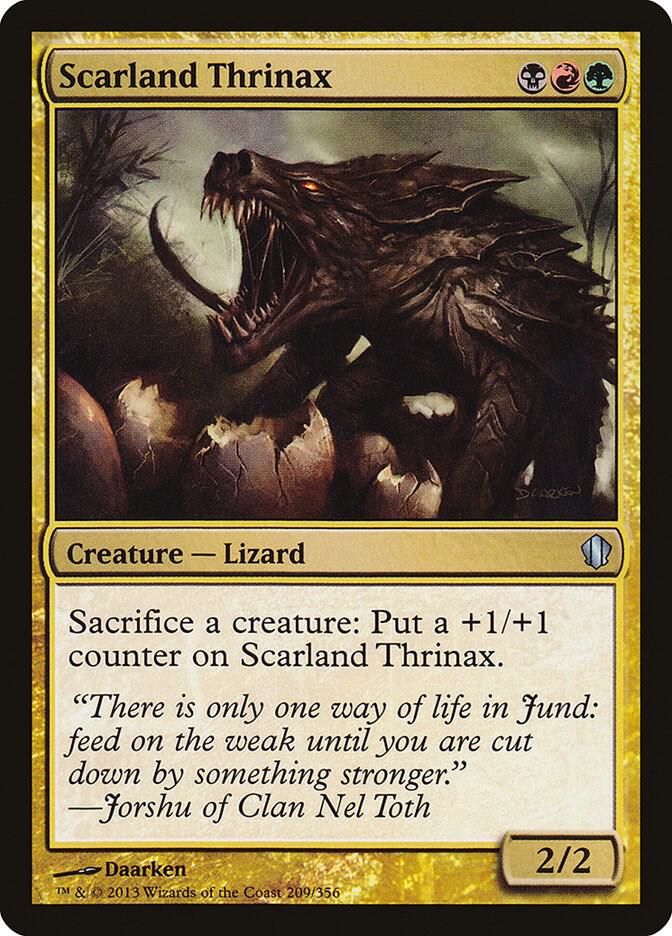
Card text
Sacrifice a creature: Put a +1/+1 counter on this creature.
We don't compare prices for this printing
MTG Compare tracks store prices for the most relevant quarter of Magic printings: the staples people play, the cheapest copy of each, and the cards worth real money. You can still find Scarland Thrinax on TCGplayer or eBay.
Mana cost
{B}{R}{G}
Power / toughness
2/2
As an eBay Partner Network affiliate, MTG Compare earns from qualifying purchases.
Card text
Sacrifice a creature: Put a +1/+1 counter on this creature.
Format legality
- StandardNot legal
- PioneerNot legal
- ModernLegal
- LegacyLegal
- VintageLegal
- CommanderLegal
- PauperNot legal
- BrawlNot legal
- OathbreakerLegal
- HistoricNot legal
- TimelessNot legal
- AlchemyNot legal
About Scarland Thrinax
Scarland Thrinax (209) is a Black, Red and Green Creature — Lizard from Commander 2013 (C13). It costs {B}{R}{G}, has mana value 3 and is a 2/2. It is printed at Uncommon rarity. It is legal in Modern, Legacy, Vintage and Commander and 1 more format.
Commander 2013 is a Commander product, released November 2013. Scarland Thrinax has 1 other card in the database, listed further down the page.
Sacrifice a creature: Put a +1/+1 counter on this creature.
Card details
- Card number
- 209
- Set
- Commander 2013 (C13)
- Set type
- Commander
- Released
- 1 November 2013
- Rarity
- Uncommon (U)
- Printing
- Standard
- Type line
- Creature — Lizard
- Colour
- Black / Red / Green
- Colour identity
- Black / Red / Green
- Mana cost
- {B}{R}{G}
- Power / toughness
- 2/2
- Finish
- Non-foil
TCGplayer listing: Scarland Thrinax
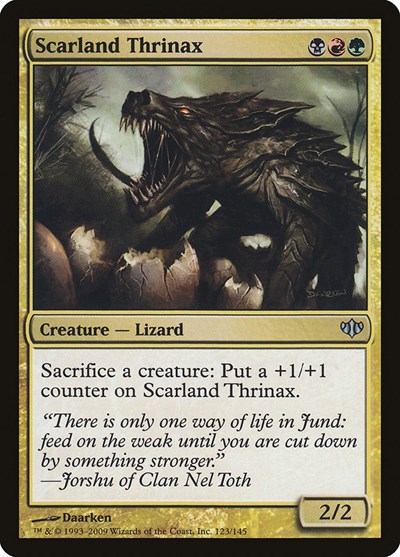
Scarland Thrinax in other sets
Every other printing with this name, one per set.
More from Commander 2013
Read next
- Magic Card Rarities Explained: What Common to Mythic Rare Is WorthWhat the rarities mean, and why they are a weak guide to price
- Where to Buy Magic: The Gathering Cards: 6 Markets ComparedWhich stores in your market carry Magic singles, and how they compare
- Are Magic Cards Cheaper Abroad? The Biggest Cross-Market GapsWhether a cross-market price gap survives postage and import tax