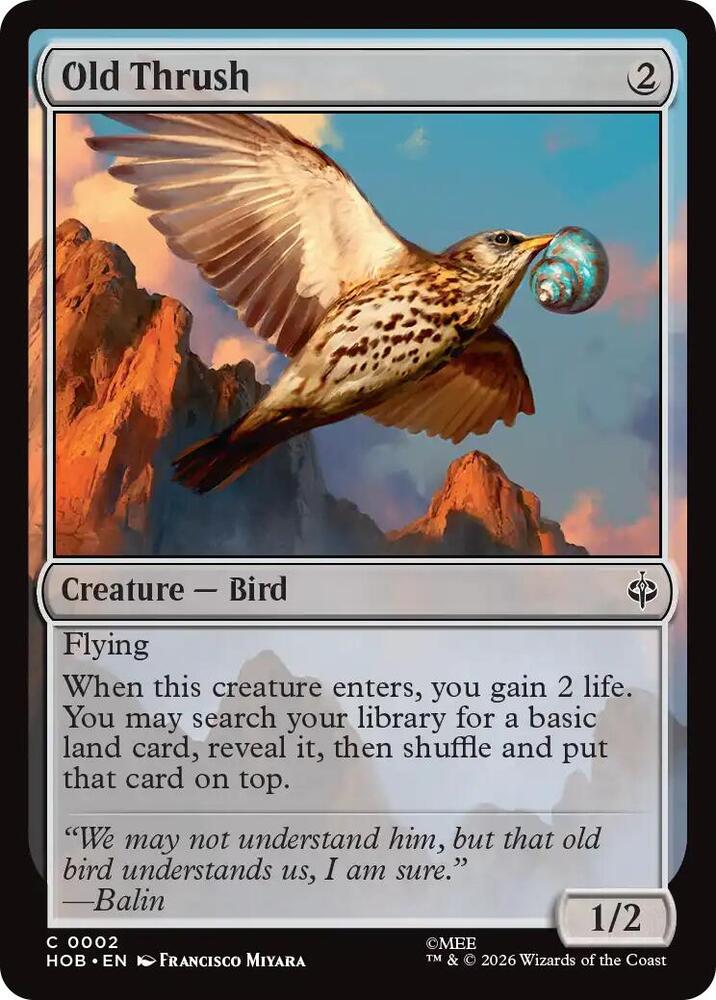
Card text
When this creature enters, you gain 2 life. You may search your library for a basic land card, reveal it, then shuffle and put that card on top.
We don't compare prices for this printing
MTG Compare tracks store prices for the most relevant quarter of Magic printings: the staples people play, the cheapest copy of each, and the cards worth real money. You can still find Old Thrush on TCGplayer or eBay.
Mana cost
{2}
Power / toughness
1/2
As an eBay Partner Network affiliate, MTG Compare earns from qualifying purchases.
Card text
When this creature enters, you gain 2 life. You may search your library for a basic land card, reveal it, then shuffle and put that card on top.
Format legality
- StandardLegal
- PioneerLegal
- ModernLegal
- LegacyLegal
- VintageLegal
- CommanderLegal
- PauperLegal
- BrawlLegal
- OathbreakerLegal
- HistoricLegal
- TimelessLegal
- AlchemyNot legal
About Old Thrush
Old Thrush (2) is a Creature — Bird from The Hobbit (HOB). It costs {2}, has mana value 2 and is a 1/2. It is printed at Common rarity. The one keyword in its text is Flying. It is legal in Standard, Pioneer, Modern and Legacy and 7 more formats.
The Hobbit is a main expansion, released August 2026.
Flying When this creature enters, you gain 2 life. You may search your library for a basic land card, reveal it, then shuffle and put that card on top.
Card details
- Card number
- 2
- Set
- The Hobbit (HOB)
- Set type
- Expansion
- Released
- 14 August 2026
- Rarity
- Common (C)
- Printing
- Standard
- Type line
- Creature — Bird
- Colour
- Colourless
- Colour identity
- Colourless
- Mana cost
- {2}
- Power / toughness
- 1/2
- Finish
- Non-foil
TCGplayer listing: Old Thrush
More from The Hobbit
Read next
- Magic Card Rarities Explained: What Common to Mythic Rare Is WorthWhat the rarities mean, and why they are a weak guide to price
- Where to Buy Magic: The Gathering Cards: 6 Markets ComparedWhich stores in your market carry Magic singles, and how they compare
- Are Magic Cards Cheaper Abroad? The Biggest Cross-Market GapsWhether a cross-market price gap survives postage and import tax